Chapter 3: The Case of the Missing Police Record
After the midnight visit, friends of the homeowner expected the mystery to be solved quickly.
They had an obvious plan.
Call the police.
Ask what happened.
Read the report.
Done.
This was Silicon Valley, after all.
We produce logs for everything.
Your toaster probably knows when you last made breakfast.
Your car knows where it was parked three Tuesdays ago.
Your phone knows you spent nineteen minutes looking at restaurant reviews before ordering the same noodles you always order.

Surely several police vehicles arriving at a private residence around midnight would leave some sort of administrative footprint.
A longtime White resident volunteered to call.
She had lived in the area for years and had always felt comfortable dealing with local law enforcement. To her, police were familiar public servants. She expected a routine conversation.
Did you respond to this address?
Could you tell us what happened?
The first answer surprised her.
There was no record.
She assumed there had been a misunderstanding.
So she called again.
And again.
Eventually she was told that a call had in fact occurred and that two officers had responded.
That answer produced a new problem.
Two?
The security footage appeared to show at least three Sheriff’s personnel at the property.
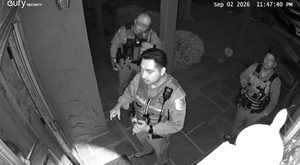
Perhaps there was an innocent explanation. Maybe one arrived separately. Maybe someone was counted differently. Maybe the footage showed something the caller misunderstood.
So she asked for more information.
That was where the friendly neighborhood troubleshooting session began to resemble a corporate support ticket after it has been escalated to a department whose email address nobody is allowed to know.
She says she heard variations of:
The caller must be protected.
The victim must be protected.
Community members are not entitled to information.
This was unfamiliar territory for someone who had spent decades feeling comfortable asking police routine questions.
The group then discovered something else.
They had apparently been asking the wrong agency.
Santa Clara Police had records.
The late-night officers captured on the homeowner’s security cameras appeared to be from the Santa Clara County Sheriff’s Office.
Excellent.
New agency, new support ticket.
The residents escalated.
Enter the California Public Records Act
By now, younger Asian Americans and Asian Americans who had grown up in the United States had joined the effort.
They understood the immigrant instinct to avoid unnecessary conflict with authority.
They also understood another great American tradition:
Filing paperwork.
So the group submitted a formal California Public Records Act request.
They asked for the things one might expect to exist after multiple deputies visit a private home:
CAD records.
Call logs.
Officer reports.
Body-camera video.
Other records connected to the response.
Finally, they thought, the mystery would become boring.
Government records are supposed to be boring.
That is one of their finest qualities.
Instead, the answer came back:
Denied.
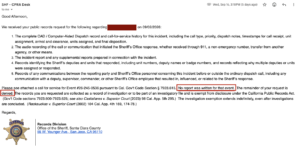
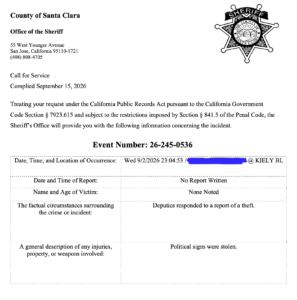
The residents had now reached a familiar stage of modern bureaucracy.
First, there was supposedly no record.
Then there had been a call and two responding officers.
Then the details could not be discussed because of the caller.
Or the victim.
Then a formal request was denied.
For engineers, this was starting to resemble a software system whose error message reads:
Something went wrong.
Useful.
The homeowner later submitted his own request. According to the materials, the Sheriff’s Office gave him another explanation: the matter was part of an ongoing investigation.
That answer raised still more questions.
If there was an investigation, what exactly was being investigated?
Was the homeowner a suspect?
Was Richard Lowenthal the victim?
Were the campaign signs evidence?
Were the unauthorized placements being investigated too?
And how long does a yard-sign investigation remain sufficiently sensitive that the homeowner whose property police visited cannot learn what happened?
The residents kept digging.
Then the security cameras offered another surprise.
About an hour before deputies arrived, the footage showed a man in the homeowner’s front yard.
He appeared to move around the property, apparently looking for something. At one point he seemed to be using his phone.
The video was not especially clear.
Friends watched it.
Someone recognized him.
“That’s him.”
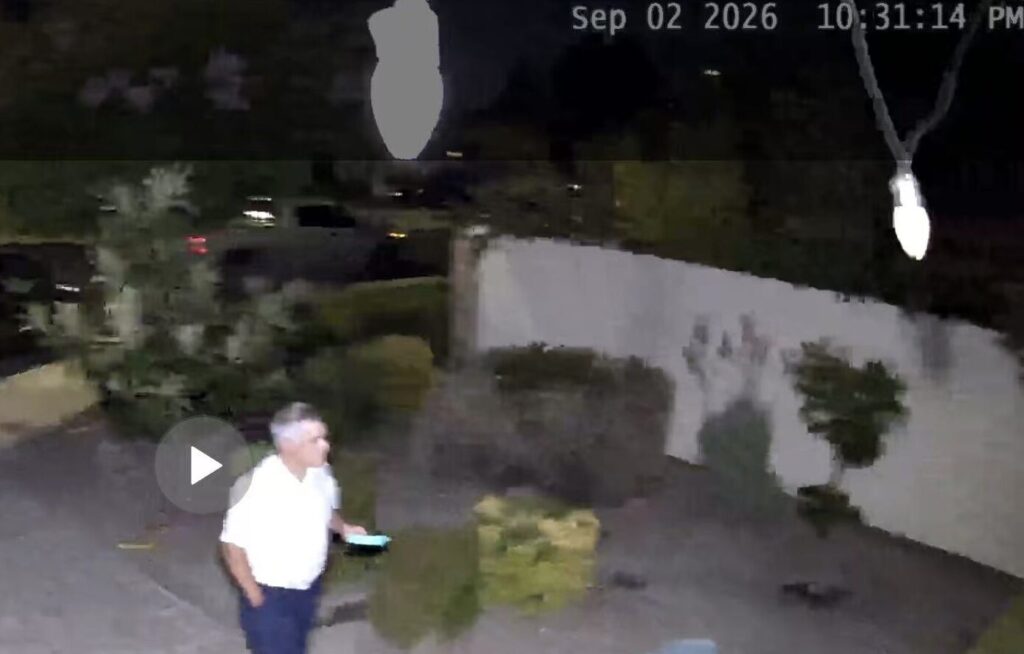
The person, according to the community’s account, appeared to be Richard Lowenthal.
Suddenly the timeline had another character.
The person who had reported the signs missing had apparently gone to the residence himself before Sheriff’s deputies arrived.
Now the questions multiplied again.
What did he tell dispatch?
What did the Sheriff’s Office know before sending deputies?
What did Santa Clara Police know?
Why had one agency treated the matter as a civil standby while another sent multiple personnel later that night?
And why was it so hard for the homeowner to obtain records about what happened on his own property?
At this point, the community had discovered an important feature of the American system.
You are absolutely entitled to transparency.
There may simply be several forms involved first.
This story is still on-going. Stay tuned to No Script for Cupertino.
This is what’s happening in Cupertino. Our story has no script.